Talegaon MIDC: A Manufacturing Corridor on the Rise
If you have been tracking Pune’s real estate market over the past two years, you will have noticed increasing chatter about one particular belt: Talegaon MIDC. What was once considered a secondary industrial outpost on the Pune–Mumbai Expressway has quietly transformed into one of Maharashtra’s most watched manufacturing corridors. The reason is not difficult to understand — a cascade of large-format industrial investments has created a structural, sustained demand for affordable housing that shows no sign of slowing down.

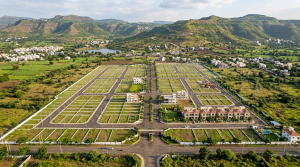
Talegaon MIDC spans approximately 578–585 hectares across the villages of Navlak-Umbre, Akurdi, and Ambi, developed by MIDC across five phases (Source: ASCC Online / industry experts). Phases I and II are fully allotted to marquee manufacturers including JCB India, L&T, POSCO India Pune Processing Centre, Emerson, BorgWarner, Continental, Finolex Cables, and Avery Denison. Key sectors represented include engineering, automobile, IT/ITES, biotechnology and pharma, chemicals, and even floriculture — with 250 acres earmarked for a dedicated floriculture park (Source: ASCC Online / KSH Infra). This diversity of industry is precisely what makes the employment base here so resilient.
Hyundai and the Talegaon MIDC Anchor Effect
The single most consequential development in recent memory is Hyundai Motor India’s occupation of the former General Motors plant at Plot A-16, Phase II of Talegaon MIDC. Vehicle production commenced on October 1, 2025, with an initial installed capacity of 170,000 units per year, scaling to 250,000 units (Source: Autocar Professional / MTDCNC, October 2025). This was not a quiet rollout. Hyundai raised its total Talegaon investment from ₹7,000 crore to ₹11,000 crore — a 57% increase — and pledged 7,600 direct jobs at the plant. The announcement was made at a meeting between Hyundai MD Unsoo Kim and Maharashtra Chief Minister Devendra Fadnavis on September 15, 2025 (Source: Punekar News, September 2025).
A single anchor of this size would be significant on its own. But what Hyundai’s arrival has done is trigger a classic automotive cluster effect — drawing in the suppliers, logistics operators, and service providers that follow a major OEM wherever it sets up operations.
The Ancillary Supplier Wave
In October 2024 alone, nine South Korean and Indian Hyundai ancillary suppliers — including Hyundai Steel, Sungwoo Hitech, NVH India, PHA India, Komos Automotive, and Doowon Automotive — announced a combined investment of ₹2,260 crore in Talegaon Dabhade, acquiring 70 acres across Mangrool, Navlakh Umbare, Badalwadi, and Karanjvihere villages. These investments are expected to create 2,640 additional direct jobs (Source: Punekar News, October 2024).
When combined with prior investment rounds facilitated in the Talegaon belt, cumulative private industrial investment now stands at approximately ₹6,640 crore, generating over 8,640 jobs (Source: Punekar News, October 2024). Each of those jobs represents a worker who needs a place to live — preferably close to work, affordable, and well-connected.
Logistics and Warehousing: The Third Layer of Talegaon MIDC Growth
Industrial activity does not operate in isolation. A booming manufacturing zone pulls in logistics infrastructure, and Talegaon is a textbook example. In December 2025, Welspun One was allotted a 46-acre parcel in MIDC Phase IV, committing ₹550 crore to develop a 1.2 million sq ft Grade-A logistics park. Their rationale was explicit: the Talegaon–Chakan cluster accounted for approximately 70% of Pune’s total warehousing leasing in 2025, clocking 7.4 million sq ft — up roughly 10% from 6.8 million sq ft in 2024 (Source: Punekar News / Welspun One press release / Business Standard, December 2025).
Logistics parks employ a significant workforce of their own — warehouse managers, logistics coordinators, forklift operators, and last-mile delivery staff. This further deepens the employment base around Talegaon and adds yet another layer of housing demand in the sub-₹50 lakh bracket.

Why Workers Choose Talegaon for Housing: Affordability Meets Connectivity
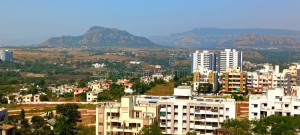
The residential appeal of Talegaon is not simply a byproduct of industrial proximity — it is the result of a genuine convergence of affordability, liveability, and multi-hub connectivity that is hard to match anywhere in the Pune Metropolitan Region.
The Affordability Advantage
Residential flat prices in Talegaon Dabhade average ₹4,550 per sq ft as of 2025, with a range of ₹3,800–₹5,650 per sq ft (Source: 99acres, 2025 data). That translates to 1 BHK flats in the ₹18.1 lakh–₹30 lakh range and 2 BHK flats between ₹33 lakh and ₹48 lakh. For perspective, those same configurations at Hinjewadi or Baner — both in the Pune Metro — would cost roughly double. Flats in Talegaon have appreciated 40% over the past ten years, with a 4.6% gain recorded in the most recent year, while land plot rates have risen approximately 25% in a single year and 900% over the decade (Source: 99acres, 2025). The average rental yield stands at 6%, making it attractive for investors as well (Source: 99acres, 2025).
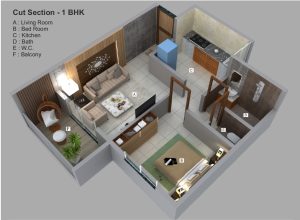
For buyers looking at entry-level options, projects like 42 Park Street offer 1 BHK and 2 BHK configurations alongside commercial shops starting from ₹24.11 lakh in Talegaon — a price point directly accessible to the industrial workforce. Similarly, Daulat Park offers 1 and 2 BHK apartments in Talegaon Dabhade starting from ₹34.5 lakh, positioned squarely in the range that mid-level plant employees and logistics professionals can realistically target.
Multi-Hub Employment Catchment
Talegaon’s residential market does not serve only MIDC workers. Chakan MIDC — home to over 750 companies employing tens of thousands — lies just 11 km away. Pimpri-Chinchwad’s industrial areas are 25 km out. Pune city is approximately 35–40 km away. Hinjewadi IT Park and the broader Maval industrial area are reachable within 30 minutes by road (Source: KSH Infra / Talegaon Real Estate blog / Naiknavare blog). Add to this the 24+ daily train services to Pune Junction — a distance of roughly 34 km — and you have a location that works for a remarkably wide cross-section of working professionals.
This multi-directional employment catchment is a structural advantage that most affordable housing micro-markets in Maharashtra cannot claim. It means demand for Talegaon housing is diversified, not dependent on any single employer or sector.
The Supply Constraint That Could Sustain Prices
One factor that is not always highlighted in discussions of Talegaon’s residential market is a meaningful supply constraint on the industrial side — one that has knock-on effects for residential land values as well. MIDC Phase IV was notified over approximately 2,390 hectares across four villages in May 2017. However, approximately 75% of the targeted land in Nigde (1,117 hectares) and Kalhat (492 hectares) villages falls within the Western Ghats Eco-Sensitive Zone, blocking acquisition entirely (Source: The Bridge Chronicle, 2024). The expansion remains largely stalled as a result.
This constrained industrial land supply means that companies wanting a Talegaon address will face scarcity — which in turn supports industrial land values and, by extension, residential land values in the surrounding area. For buyers of residential plots and apartments, this supply-side restriction is an underappreciated tailwind.
Conclusion: Talegaon MIDC Represents a Generational Buying Window
The investment thesis for residential real estate near Talegaon MIDC rests on three reinforcing pillars. First, the employment base is large, growing, and diversified — from Hyundai’s 7,600 direct jobs to thousands more across ancillary suppliers, logistics parks, and the broader Chakan–Talegaon industrial cluster. Second, residential prices remain significantly lower than comparable Pune micro-markets, offering genuine affordability to first-time buyers and strong yield to investors. Third, industrial land supply is constrained by eco-sensitive zone restrictions, which is likely to sustain upward pressure on both industrial and residential values over the medium term.
If you are a first-time buyer or an investor evaluating Pune’s growth corridors, the Talegaon MIDC belt deserves serious consideration before prices catch up to the fundamentals. Pro Realty Solutions specialises in this market and can help you navigate the options — from ready-to-move options at Daulat Park to competitively priced apartments at 42 Park Street. Reach our team at +91 89566 13037 or akshay@prorealtysolutions.co.in to find a home or investment that fits your budget and goals in the Talegaon MIDC corridor.
Frequently Asked Questions
Which major companies operate in Talegaon MIDC?
Talegaon MIDC hosts a diverse set of large manufacturers across its fully allotted Phases I and II. Key names include Hyundai Motor India (commenced production October 2025), JCB India, L&T, POSCO India Pune Processing Centre, Emerson, BorgWarner, Continental, Finolex Cables, and Avery Denison. The zone covers sectors including automobiles, engineering, chemicals, IT/ITES, and biotechnology (Source: ASCC Online / KSH Infra / industry experts).
How does Talegaon MIDC industrial growth affect housing demand?
Large-scale industrial investment creates direct employment at the plant level and indirect employment through ancillary suppliers and logistics operators. Hyundai’s Talegaon plant alone is pledged to generate 7,600 direct jobs, while nine ancillary suppliers announced a further 2,640 jobs in 2024. Workers across this expanding employment base — from shop-floor operators to mid-level engineers — actively seek affordable housing close to their workplace, driving sustained residential demand in Talegaon Dabhade and nearby localities.
What is the current residential price range near Talegaon MIDC?
As of 2025, residential flat prices in Talegaon Dabhade average ₹4,550 per sq ft, with a range of ₹3,800–₹5,650 per sq ft (Source: 99acres, 2025). This places 1 BHK flats in the ₹18–30 lakh range and 2 BHK flats between ₹33 lakh and ₹48 lakh — roughly 50% lower than comparable configurations in Hinjewadi or Baner. Average rental yields stand at approximately 6%, making the market attractive for both end-users and investors.